Meta Title: 5 Science-Backed Ways Kids Learn Faster | Simple Learning Tips for Parents
Meta Description: Discover 5 science-backed ways to help children learn faster. Practical, research-supported strategies that improve memory, attention, and confidence without adding pressure.
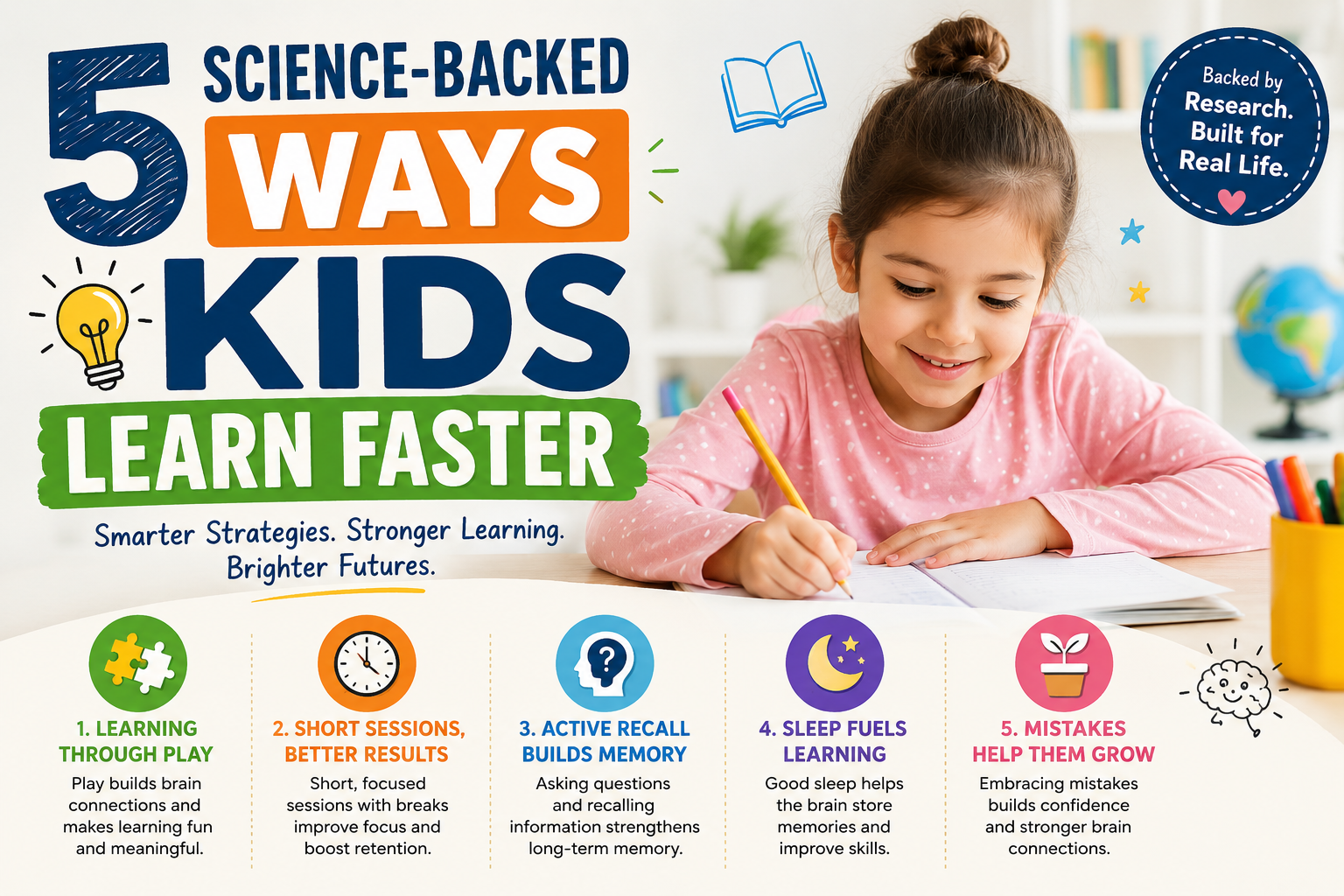
5 Science-Backed Ways Kids Learn Faster
Every parent has wondered:
“How can I help my child learn more easily?”
The good news is that children don’t necessarily need more study time—they need better learning methods.
Researchers in psychology, neuroscience, and education have discovered that certain habits dramatically improve how children absorb, remember, and apply new information.
Here are five evidence-based strategies that make learning easier, more enjoyable, and much more effective.
1. Learning Through Play Works Better Than Memorization

Children’s brains are naturally wired to learn through play.
When kids build with blocks, solve puzzles, pretend to be doctors, or create stories, they strengthen important brain connections responsible for:
- Problem-solving
- Language
- Creativity
- Social skills
- Memory
Play activates multiple areas of the brain simultaneously, making learning more meaningful than passive memorization.
Try This
Instead of asking your child to memorize animal names, create a pretend zoo where they become the zookeeper.
Instead of practicing math with worksheets alone, count toys, snacks, or building blocks.
Learning becomes something children experience—not something they simply memorize.
2. Short Learning Sessions Beat Long Study Hours

Attention spans in young children are surprisingly short.
Research suggests that frequent breaks help the brain consolidate new information more effectively than long, uninterrupted study sessions.
Instead of one 60-minute session, try:
- 15–20 minutes of focused learning
- 5-minute movement break
- Another short activity
This keeps children’s brains fresh and motivated.
Brain Break Ideas
- Dance for one song
- Stretch
- Jumping jacks
- Quick scavenger hunt
- Drink water
Movement improves blood flow to the brain, helping children return with better focus.
3. Active Recall Helps Kids Remember More

One of the strongest findings in learning science is that trying to remember information strengthens memory better than simply reviewing it repeatedly.
Instead of saying:
“Read this page again.”
Ask questions like:
- What happened first?
- Can you explain it in your own words?
- Can you draw what you learned?
- Can you teach it to me?
This forces the brain to retrieve information, making memories much stronger.
4. Good Sleep Is Part of Learning

Learning doesn’t stop when children go to bed.
During sleep, the brain organizes and stores information learned throughout the day.
Children who consistently get enough sleep often demonstrate:
- Better memory
- Improved attention
- Faster problem-solving
- Better emotional regulation
Sleep is one of the most powerful—and often overlooked—learning tools.
Healthy Sleep Tips
- Keep bedtime consistent.
- Avoid screens before bed.
- Read a calming story together.
- Create a quiet bedtime routine.
5. Encourage Mistakes Instead of Avoiding Them

Many children become afraid of getting answers wrong.
But mistakes are actually one of the fastest ways the brain learns.
When children make an error, recognize it, and then correct it, the brain strengthens the correct neural pathway.
Instead of saying:
“That’s wrong.”
Try:
- “Let’s figure it out together.”
- “Great try! What could we change?”
- “Mistakes help our brains grow.”
This builds confidence while encouraging persistence.
Bonus Tip: Add Coloring to Learning

Coloring may seem like just a fun activity, but it supports several learning skills at once.
Coloring helps children develop:
- Fine motor control
- Hand strength
- Pencil grip
- Concentration
- Visual discrimination
- Creativity
Many parents combine coloring pages with science, geography, letters, or storytelling to reinforce lessons in an enjoyable way.
For example:
- Color animals while learning habitats.
- Color world landmarks while exploring different countries.
- Color plants while learning about nature.
- Complete hidden-object coloring pages to improve observation skills.
Learning becomes much more memorable when children are actively creating.
Looking for Educational Coloring Books?
Help your child build focus, creativity, and fine motor skills with printable coloring books designed for curious young learners.
✨ Travel adventures
✨ Hidden object activities
✨ Cozy coloring pages
✨ Screen-free learning fun
👉 Browse our Etsy shop:
https://scribblesnsnuggles.etsy.com
What Research Suggests
Across developmental psychology and education research, several themes consistently emerge:
- Active learning is more effective than passive review.
- Retrieval practice strengthens long-term memory.
- Adequate sleep supports memory consolidation.
- Physical movement improves attention and executive function.
- Play-based experiences foster cognitive and social development.
These findings support practical strategies that families can use every day without expensive programs or long study sessions.
Frequently Asked Questions
At what age do children learn fastest?
The early childhood years—from birth through about age 8—are a period of rapid brain development. However, children continue to learn effectively throughout childhood when they have engaging experiences, supportive relationships, and opportunities to practice.
How long should young children study?
Most experts recommend short, focused learning sessions. Around 15–20 minutes at a time works well for many elementary-age children, with breaks in between.
Does coloring really help learning?
Yes. Coloring supports fine motor development, attention, visual processing, and creativity. When paired with educational topics, it can also reinforce concepts in a fun, low-pressure way.
What is the best way to improve memory?
Encourage children to explain what they learned, ask them questions, space learning over multiple days, and ensure they get enough sleep.
Final Thoughts
Helping children learn faster isn’t about pushing them harder—it’s about working with how their brains naturally learn.
By combining play, short learning sessions, active recall, healthy sleep habits, and a positive attitude toward mistakes, you can create an environment where learning feels enjoyable and lasting.
Small changes in daily routines often lead to big improvements in confidence, curiosity, and long-term learning success.
SEO Keywords
- science-backed learning methods for kids
- how kids learn faster
- child learning tips
- brain-based learning strategies
- improve child’s memory
- active recall for kids
- learning through play
- study tips for children
- parenting education tips
- child development learning
Leave a Reply